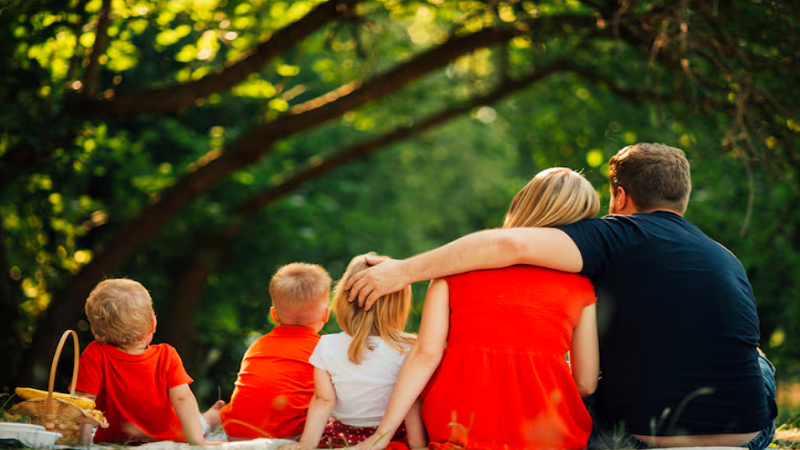
They say it takes a village to raise a child, but in my experience, it takes a family to shape a person’s entire life. Family is not just a word — it is a world unto itself. It is the first community we belong to, the first love we experience, and the first lesson in what it truly means to care for another human being. When I think about my own family, I am filled with a deep sense of gratitude, warmth, and wonder. This article is a tribute to my family — the people who have made me who I am today.
My family is my greatest treasure. In a world that is constantly changing, where friendships come and go, careers shift, and cities transform, my family has remained my one constant anchor. They are the people I call when life gets hard, celebrate with when things go right, and sit in comfortable silence with when words are simply not enough.
The Structure of My Family
My family is a beautiful blend of personalities, ages, and perspectives. At its core, it consists of my parents, my siblings, and the extended relatives who gather during festivals, weddings, and ordinary Sunday afternoons that somehow become unforgettable memories.
My parents are the pillars of our home. My father is a man of few words but immense wisdom. He taught me that hard work is not just a habit — it is a form of self-respect. My mother, on the other hand, is the emotional heartbeat of our family. She has an extraordinary ability to sense when something is wrong before anyone says a word. She communicates love through food, through presence, and through those small gestures that we often take for granted until we are far from home.
My siblings are my oldest friends and my fiercest critics. Growing up together meant sharing rooms, arguments, secrets, and dreams. We fought over the television remote and defended each other against the world. That paradox — fighting with each other while fiercely protecting each other — is perhaps the most honest description of sibling love I can offer.
And then there are the grandparents, aunts, uncles, and cousins who fill our family gatherings with laughter, old stories, and a sense of history that stretches far beyond any single generation. Every family reunion feels like a reunion with my own past.
The Values My Family Gave Me
A family is not just a group of people sharing a last name or a rooftop. A family is the place where values are born and nurtured. Looking back, I realize that almost everything I believe in — honesty, resilience, compassion, and the importance of education — was planted in my heart by my family.
Honesty was never negotiable in our household. My parents believed that truth, even when uncomfortable, is always the right path. They modeled this principle not just through words but through their actions. I watched my father admit his mistakes openly and my mother give honest advice even when it was not what someone wanted to hear.
Resilience was another lesson I absorbed through observation. Life was not always easy for my family. There were financial struggles, health challenges, and moments of deep uncertainty. But through all of it, my parents never lost their dignity or their hope. They taught me that difficulties are not the end of the story — they are simply part of it.
Compassion was woven into the fabric of our daily life. My mother would cook extra food for neighbors who were going through hard times. My father would quietly help relatives who needed financial support, never making a show of it. These acts of generosity taught me that true strength lies in giving, not in accumulating.
And above all, my family placed an enormous value on education. Not just academic learning, but the curiosity to keep growing, keep asking questions, and keep exploring the world. They believed that knowledge was the one gift that could never be taken away.
Family Traditions That Bind Us Together
One of the things I love most about my family is our traditions. These are the rituals — big and small — that give our family life its unique texture and rhythm.
Every Friday evening, without exception, our family gathers for dinner together. It does not matter how busy the week has been, how many deadlines are looming, or how tired everyone is. That dinner table is sacred. It is where we share our weekly stories, laugh at old jokes, argue about everything, and simply enjoy each other’s company. That weekly ritual has taught me more about the importance of showing up for the people you love than any book ever could.
During Eid, our home transforms into a center of warmth and celebration. The smell of my mother’s cooking fills every corner of the house. Relatives arrive, children run through the hallways, and for a few days, the ordinary world fades away and is replaced by something that feels almost magical. These celebrations are not just about food or gifts — they are about remembering that we belong to something larger than ourselves.
We also have a tradition of storytelling. My grandparents were gifted storytellers, and those stories — of their youth, their struggles, their adventures — have become part of our family’s living mythology. Through their stories, I learned where I came from, and that knowledge gave me a foundation on which to build my own identity.
Challenges and Growth
No family is without its struggles, and mine is no exception. There have been moments of conflict, misunderstanding, and pain. There have been disagreements that stretched on for longer than they should have, and silences that felt heavier than words.
But what I have come to appreciate is that these challenges were not weaknesses in our family — they were the very things that made us stronger. Every conflict we navigated taught us something about communication, empathy, and the art of forgiveness. Every difficult period brought with it a deeper understanding of one another.
I have learned that love within a family is not a passive feeling — it is an active, daily choice. It requires patience, especially when patience feels impossible. It requires the willingness to apologize, to listen, and to show up even when showing up is hard.
The Role of Family in Mental Health and Well-being
Modern research consistently confirms what my personal experience has always suggested: family is one of the most powerful contributors to mental and emotional well-being. A supportive family environment provides a sense of security, belonging, and purpose that is difficult to replicate in any other setting.
When I have faced anxiety, self-doubt, or grief, my family has been my first line of support. Not because they always had the right words, but because they were simply there — present, consistent, and unwavering in their love. That presence, more than any advice or solution, has been the most healing thing of all.
Research also shows that children who grow up in loving, stable family environments tend to develop stronger emotional regulation skills, greater resilience, and healthier relationships throughout their lives. My own upbringing has confirmed this truth. The emotional safety I experienced at home gave me the confidence to take risks, to be vulnerable, and to trust others.
What My Family Means to Me Today
As I have grown older, my relationship with my family has evolved. I see my parents differently now — not just as authority figures, but as complex, fully realized human beings who did their best with what they had. I see my siblings as individuals whose journeys I admire deeply. And I see myself as a link in a chain that stretches far back into history and will continue long after I am gone.
My family has given me my name, my values, my stories, and my sense of self. They have been my cheerleaders in moments of triumph and my comfort in moments of failure. They have loved me not for my achievements, but simply for existing — and that unconditional love is the most profound gift I have ever received.
Conclusion
In a world that often measures success by individual accomplishment, I believe there is something deeply radical and revolutionary about celebrating family. About recognizing that we are not self-made. That behind every person who has achieved something meaningful, there are parents, siblings, grandparents, and loved ones who contributed to that achievement in ways both visible and invisible. See More